
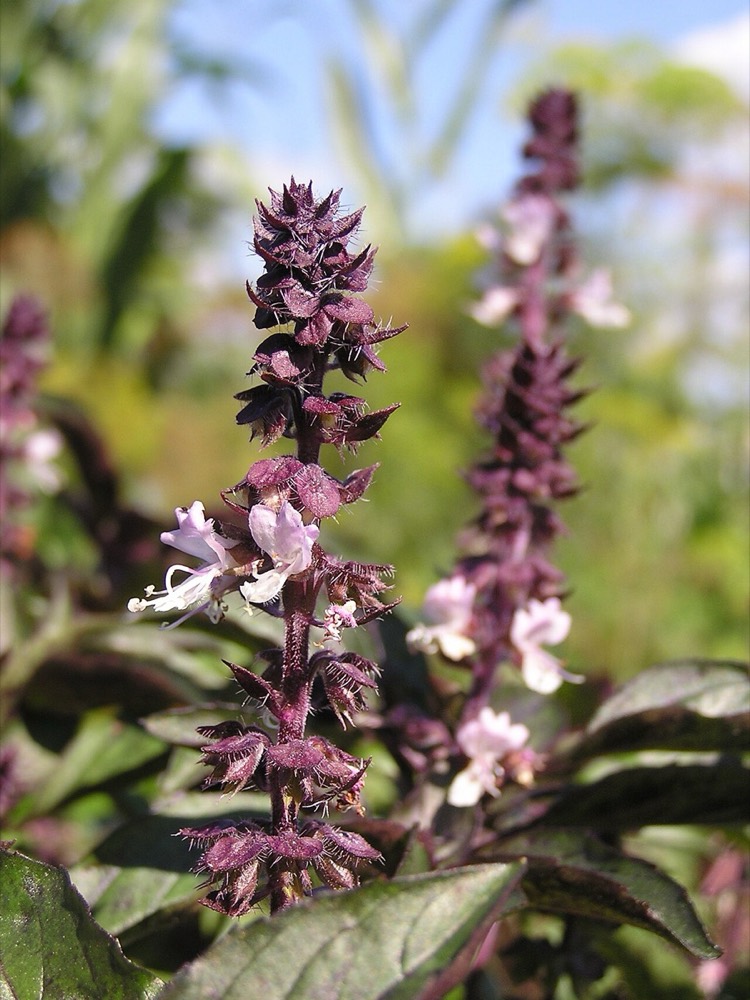
Is Basil Toxic to Cats and Dogs? (Ocimum basilicum)
Quick answer
Cats and basil plants: the ASPCA lists basil as non-toxic to cats. It is not catnip; basil lacks nepetalactone. Which kitchen herbs are listed toxic.
Updated 2026-09-25 · Sources: ASPCA Animal Poison Control, actonanimalhospital.com, floridamuseum.ufl.edu
Found one? Take a photo to identify it.
Download on the App StoreWhat are the key facts?
- Scientific name: Ocimum basilicum
- Also called: Saint Joseph's Wort, Thai Basil, Sweet Basil
- Toxic to cats: Listed as non-toxic
- Toxic to dogs: Listed as non-toxic
Is Basil toxic to cats and dogs?
ASPCA Animal Poison Control lists Basil (Ocimum basilicum) as non-toxic to cats and dogs. Non-toxic on that list means no poisoning is expected; a pet that eats a lot of any plant can still vomit or have an upset stomach.
What to do if your pet ate it
If a pet may have eaten a plant, contact a veterinarian, ASPCA Animal Poison Control (888) 426-4435 or Pet Poison Helpline (855) 764-7661. Note what was eaten, how much and when, and bring a photo or a piece of the plant. Do not induce vomiting or give home remedies unless a professional tells you to.
What to watch for anyway
Non-toxic covers poisoning, not everything. A cat or dog that chews a lot of Basil can vomit or have loose stools from the fibre, and fertiliser, pesticide residue or leaf shine on the plant is a separate risk. If your pet keeps chewing houseplants, the habit itself is worth a word with your vet.
Plants people check next
Confirm it is really this plant
Toxicity lists are by species, and many houseplants look alike. Photograph the whole plant, a leaf close-up and any flower in even light; the app reads the species first, then you can check it here. If the species is uncertain, act as if it were toxic.
Cats and basil plants: what actually happens
A cat that nibbles a basil plant is not poisoned by it: the ASPCA lists basil (Ocimum basilicum) as non-toxic to cats and dogs. Acton Animal Hospital adds the practical limits: eating a lot of it can still cause vomiting, diarrhoea or mild lethargy, dried basil is more irritating than fresh, and basil cooked with garlic or onions is a real risk because garlic and onions are toxic to cats.
So the plant on the windowsill is fine; the pesto on your plate is not something to share.
Why do cats love basil?
Mostly smell and texture, not chemistry. Acton Animal Hospital lists curiosity about the strong scent and crinkly leaves, boredom in indoor cats, and an instinct to chew greens that may help with hairballs. Basil is in the mint family, Lamiaceae (ASPCA), the same family as catnip, which is why people expect it to have a catnip-like effect. It does not; see the next section.
Is basil like catnip for cats?
No. Catnip's effect comes from nepetalactone, which the ASPCA names as its active principle. Basil does not make it. A 2020 study in Science Advances, summarised by the Florida Museum of Natural History, found that the ancestor of the mint subfamily that includes basil, oregano, rosemary, lemon balm and mint lost the ability to make this class of compounds (iridoids) through a gene deletion 55 to 65 million years ago. Catnip later rebuilt the ability by a different route, about 20 million years ago. The museum puts the share of cats that respond to catnip at about two-thirds.
If your cat rolls in the basil, that is interest in a strong smell, not a catnip reaction. And note that catnip itself is not on the ASPCA's non-toxic list: it lists catnip as toxic to cats, with vomiting and diarrhoea possible when a cat eats a lot.
Are there any herbs that are toxic to cats?
Yes, several common kitchen herbs are on the ASPCA's toxic list, even though basil is not:
- Oregano (Origanum vulgare hirtum). Toxic to cats, dogs and horses; gastrointestinal irritant; mild vomiting and diarrhoea.
- Mint (Mentha species). Toxic to cats, dogs and horses; essential oils; vomiting and diarrhoea with large amounts.
- Chives (Allium schoenoprasum). Toxic to cats, dogs and horses; can damage red blood cells (hemolytic and Heinz body anaemia), with blood in the urine, weakness, a fast heart rate and panting. The onion family is the serious one on this list.
- Catnip (Nepeta cataria). Listed toxic to cats; vomiting and diarrhoea, and sedation or stimulation depending on the cat.
The herbs we have checked that the ASPCA lists as non-toxic include basil and rosemary. If a cat has eaten chives or anything from the onion family, call your vet or ASPCA Animal Poison Control on (888) 426-4435.
What is the most toxic plant to a cat?
No official ranking exists, but true lilies are the plants vets treat as an emergency: the ASPCA lists them as causing kidney failure in cats. Unlike basil, a lily in a vase is a reason to call a vet even if the cat only touched the pollen. See lilies and cats and our list of house plants safe for cats.
Growing basil in a home with a cat
Acton Animal Hospital suggests moving plants to a high shelf or a closed-off area, offering cat grass as something the cat is allowed to chew, and adding enrichment so a bored indoor cat has less reason to chew plants. Grow the basil where the cat cannot also reach pots of chives, mint or oregano, which are on the toxic list above.
About this update
The sections above headed what happens when cats eat basil, why cats like it, basil versus catnip, toxic herbs, the most toxic plant for cats and growing basil with a cat were added on 2026-09-25. Research and drafting were done with the help of AI, and every figure was checked line by line against the sources listed on this page.
FAQ
Is Basil safe for cats?
The ASPCA list marks Basil non-toxic to cats. That covers poisoning, not stomach upset from chewing a lot of it.
Is Basil safe for dogs?
The ASPCA list marks Basil non-toxic to dogs.
My pet only chewed a leaf. Should I still call?
If the plant is on the non-toxic list and your pet seems normal, watch for vomiting or drooling; call if anything changes or if you are not sure it is really this plant.
Why do cats love basil?
Its strong scent and crinkly leaves attract curious or bored cats, and some cats chew greens instinctively (Acton Animal Hospital). It has no catnip compound.
Are there any herbs that are toxic to cats?
Yes. The ASPCA lists oregano, mint, chives and catnip as toxic to cats; chives and other onion-family plants are the most serious.
What is the most toxic plant to a cat?
True lilies are treated as an emergency because the ASPCA lists them as causing kidney failure in cats.
Is basil like catnip for cats?
No. Basil lacks nepetalactone, the catnip compound; its branch of the mint family lost the ability to make it 55 to 65 million years ago (Florida Museum).
Can cats eat pesto?
No. Pesto usually contains garlic, and Acton Animal Hospital notes garlic and onions are toxic to cats. Call your vet if a cat has eaten some.
More in Plants Toxic to Cats and Dogs
- Cats and Spider Plants: Toxic? Why Cats Chew Them
- Is Boston Fern Toxic to Cats and Dogs? (Nephrolepis exaltata bostoniensis)
- Is Parlor Palm Toxic to Cats and Dogs? (Chamaedorea elegans)
- Is Areca Palm Toxic to Cats and Dogs? (Dypsis lutescens)
- Is Calathea Toxic to Cats and Dogs? (Calathea spp.)
- Is Orchid (Phalaenopsis) Toxic to Cats and Dogs? (Phalaenopsis sp.)
- Is African Violet Toxic to Cats and Dogs? (Saintpaulia spp.)
- Is Christmas Cactus Toxic to Cats and Dogs? (Schlumbergera bridgesii)
- Is Rosemary Toxic to Cats and Dogs? (Rosmarinus officinalis)
Related
See what's actually growing around you.
Start with a single scan.
Found one? Take a photo to identify it.
Sources
- ASPCA Animal Poison Controlwww.aspca.org/pet-care/aspca-poison-control/toxic-and-non-toxic-plants/basil
- actonanimalhospital.comactonanimalhospital.com/blog/is-basil-safe-for-cats/
- floridamuseum.ufl.eduwww.floridamuseum.ufl.edu/science/catnip-twist-on-old-family-tradition/
- ASPCA Animal Poison Controlwww.aspca.org/pet-care/aspca-poison-control/toxic-and-non-toxic-plants/catnip
- ASPCA Animal Poison Controlwww.aspca.org/pet-care/aspca-poison-control/toxic-and-non-toxic-plants/oregano
- ASPCA Animal Poison Controlwww.aspca.org/pet-care/aspca-poison-control/toxic-and-non-toxic-plants/mint
- ASPCA Animal Poison Controlwww.aspca.org/pet-care/aspca-poison-control/toxic-and-non-toxic-plants/chives
- ASPCA Animal Poison Controlwww.aspca.org/pet-care/aspca-poison-control/toxic-and-non-toxic-plants/lily
Compiled by the PlantLens editorial team
Every fact on this page is taken from the sources listed above; numbers and prices are copied from the source, and prices name the guide or auction and its date. Research and drafting were assisted by AI, and each claim was then checked against the cited sources. Checked 2026-09-25. We do not buy, sell or grade items; the app identifies what you photograph and points you to these references.